Why go
A working city, and one to enjoy
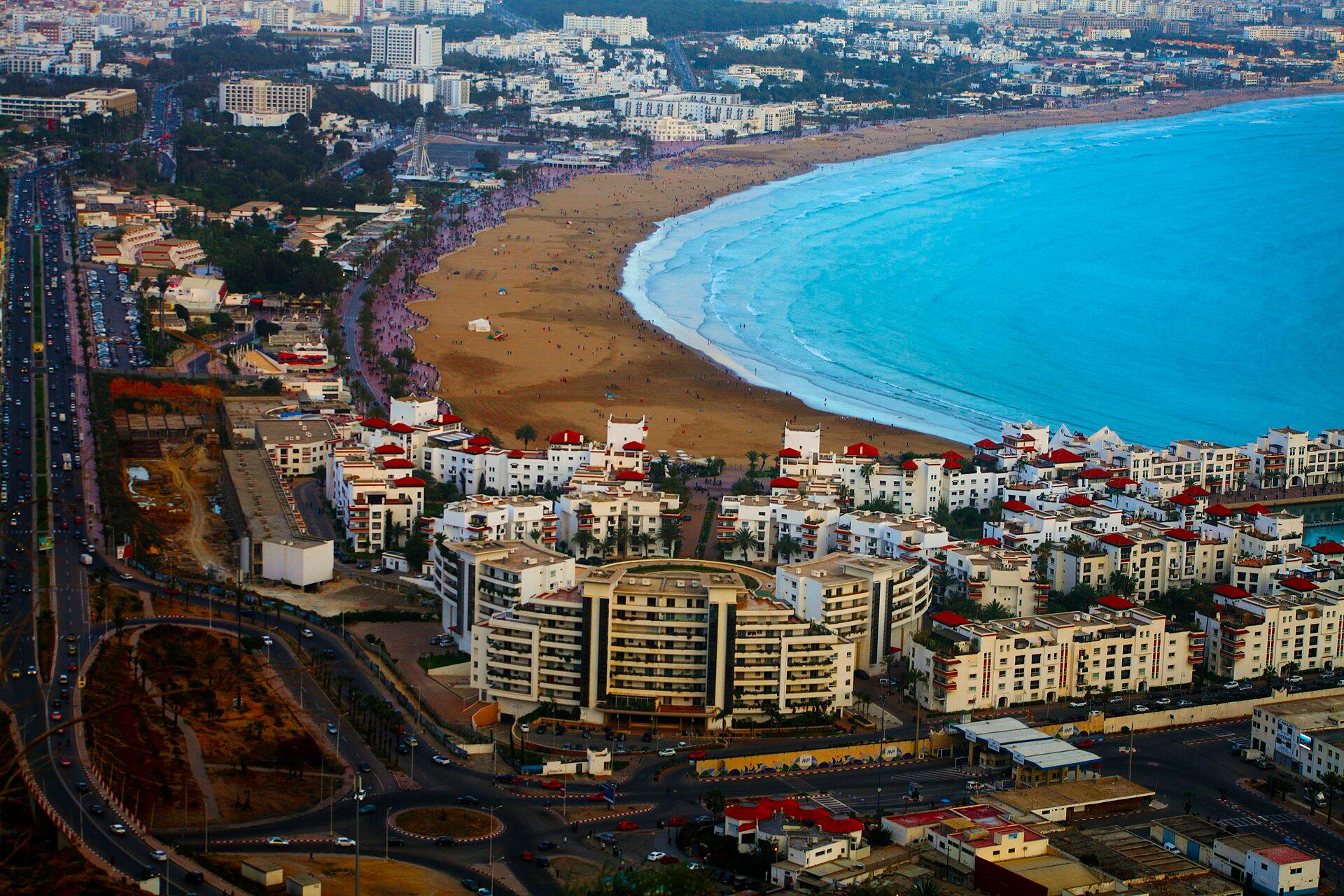
To Moroccans it is Casa, or Dar el Beida in Darija: the city people move to from every corner of the country to study or find work, and where you hear every one of its accents. It has neither the maze of Fez nor the great square of Marrakesh; it has cafés packed at any hour and a seafront where half the city comes out for some air as evening falls.
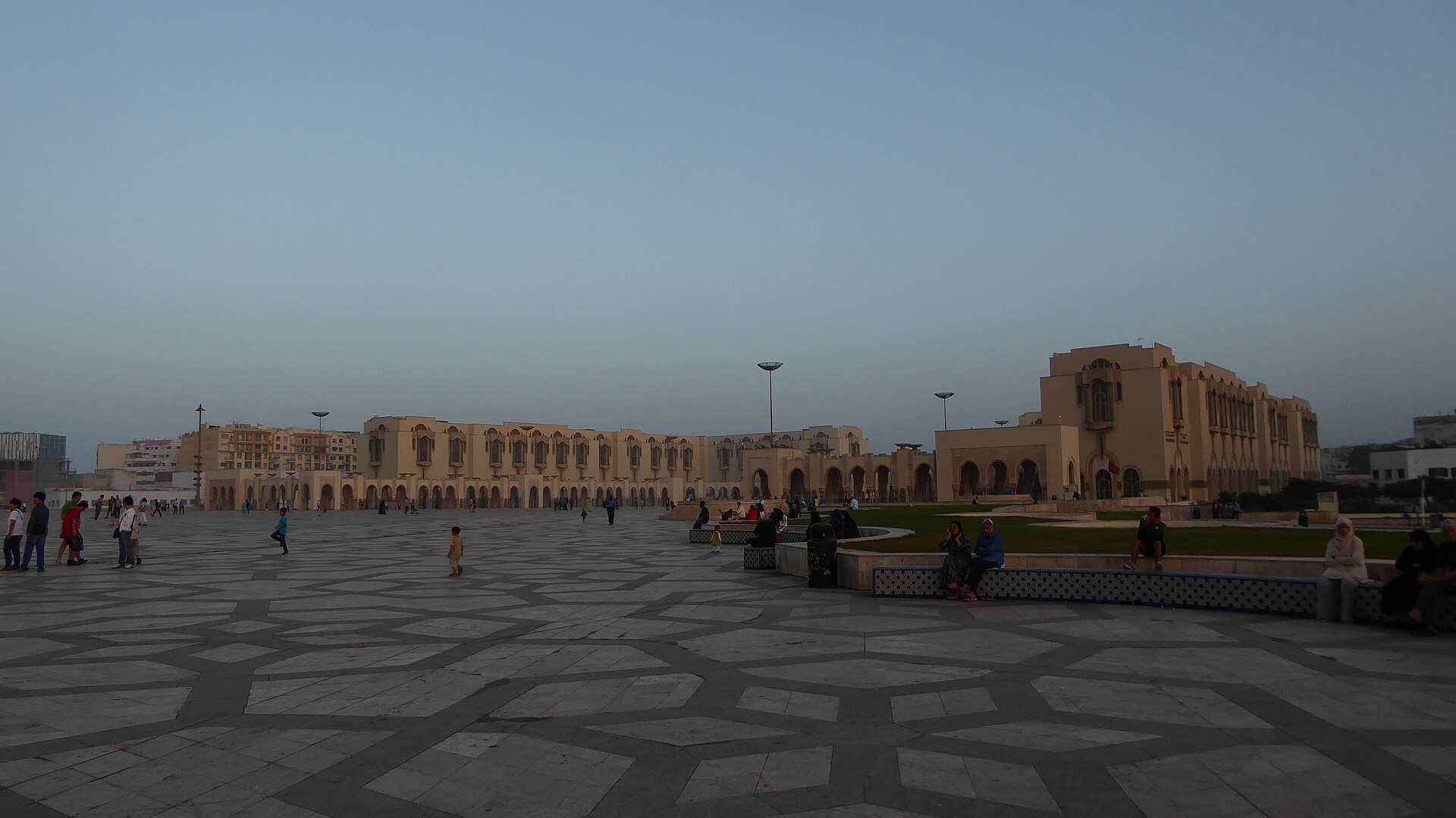
Anyone expecting nothing but traffic and offices is in for a surprise: one of the richest art deco centres in North Africa, the Hassan II Mosque above the ocean itself, and the Habous district.
The neighbourhoods worth knowing
The city is huge, but what matters to visitors fits into a few areas linked by tram.
- The centre: Boulevard Mohammed V, Place Mohammed V and the Central Market.
- The old medina: small, by the port, with neighbourhood shops.
- The Habous: the new medina, orderly and calm, with the Mahkama du Pacha.
- Maârif and Gauthier: shops, cafés and restaurants of present-day Casablanca.
- Anfa and Aïn Diab: villas, the Corniche, beaches and the Morocco Mall.
A base for the World Cup
Football here means Raja and Wydad, one of the most intense rivalries in Africa, and you will feel it in every café. Casa Voyageurs is also the terminus of the Al Boraq, the high-speed line to Rabat and Tangier: we cover it in Tangier, Rabat and Casablanca by train. Note: Casa Port is not an Al Boraq stop.
What to see in 1, 2 and 3 days
Day 1 · The mosque and the centre
- First thing, the Hassan II Mosque on a guided tour, with fixed time slots (slightly different on Fridays).
- A walk along the seafront to the old medina.
- The lanes of the old medina, by the port, with no particular plan.
- Fish for lunch around the Central Market.
- The art deco of Boulevard Mohammed V and Place Mohammed V: look up at the cornices and balconies.
Day 2 · Habous and the Corniche
- Morning in the Habous district: arcades, olives, spices and almond pastry shops.
- The Mahkama du Pacha, a former courthouse in Hispano-Moorish style.
- Lunch in Maârif or Gauthier, as Casablancans do on weekdays.
- Afternoon on the Aïn Diab Corniche and sunset over the ocean.
- For shopping or air conditioning, the Morocco Mall.
Day 3 · Rabat or El Jadida
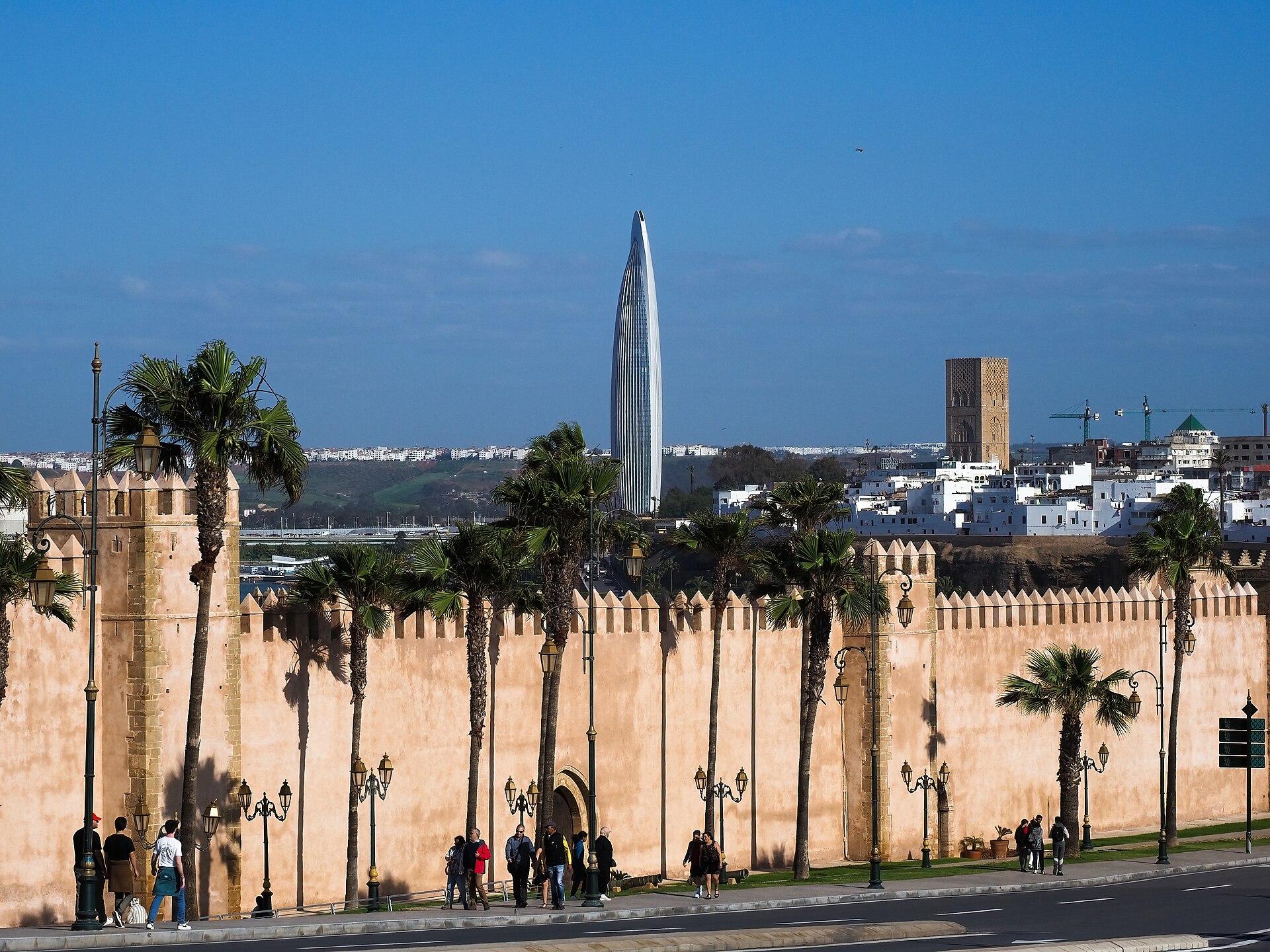
- Train option: the Al Boraq from Casa Voyageurs to Rabat Agdal, for the Kasbah of the Udayas and the Hassan Tower.
- Coastal option: El Jadida, to the south, with the Portuguese City of Mazagan, a World Heritage Site since 2004 and the nearest inscribed site.
- If you stay, the Museum of Moroccan Judaism, in the Oasis district.
- Last afternoon: mint tea in the centre and an evening stroll along the Corniche.
What to eat in Casablanca
Casablanca is a port: grilled sardines, fried fish and seafood are everyday food, and the Central Market is the place to try them. Because people from all over the country live here, you will find the cooking of every region. Friday is couscous day at home, and many popular restaurants serve it.
Alcohol is only served in licensed restaurants and bars; drinking in the street is illegal. In summer, be careful with salads. More pointers in customs and tipping.
- Sardines and the catch of the day.
- Harira, a soup of tomato, lentils and chickpeas.
- Fish pastilla.
- Msemen and baghrir with honey for breakfast.
- Mint tea.
Where to stay in Casablanca
The stadium is outside the city: choose by transport links rather than by the view.
Budget
Simple hotels and hostels in the centre, near the tram. Old buildings of variable charm: check recent photos.
Mid-range
Modern hotels in Maârif, Gauthier or next to Casa Voyageurs, a good base for the Al Boraq.
Top end
Large hotels on the Aïn Diab Corniche and in Anfa, facing the ocean. Further from the centre.
Affiliate link: if you book through it we earn a commission, at no extra cost to you. How we are funded
Getting around and avoiding scams
Getting around: tram, busway and red taxis
The tram and the busway form a single network of 151 stations with a single ticket, with a service on average every 8 minutes. It is the easiest way to get from the centre to the Corniche, the Habous or the station.
Petits taxis are red and only operate within the city. The meter is compulsory: ask the driver to switch it on when you get in. To leave the city limits, use grands taxis. Uber returned to Casablanca on 27 November 2025, but the legal framework for these apps is still incomplete.
Safety and scams
Morocco is, in general terms, a safe country for travellers, according to Spain's Foreign Ministry. The usual problem here is theft of bags and phones in busy areas, and it pays to be careful at cash machines. An authorised guide carries a badge and a permit from the local authority; if they don't show it, say thank you and move on. The beaches have strong currents.
Weather and money
The Atlantic tempers the summer: 18.7 to 24.6 °C in June and 20.5 to 26.1 °C in July (1991-2020 normals), although 33.4 °C was recorded on 1 July 2026 (weather in June and July). Cards work in most hotels, but not in every shop: carry dirhams (money and payments). For your phone, see eSIM and internet.
The Grand Stade Hassan II, under construction in Benslimane
- Name
- Gran Estadio Hassan II (El Mansouria, Benslimane)
- Capacity
- ≈ 115,000
- Status
- Under construction
- Distance from the centre
- 39.7 km37 min by car, without traffic
Casablanca's stadium for 2030 is not in Casablanca: the Grand Stade Hassan II is being built in El Mansouria, in Benslimane province, about 38 km to the north-east. Our road calculation gives 39.7 km and about 37 minutes without traffic; on match days, considerably longer.
It is under construction, with around 115,000 seats planned. According to the president of the Moroccan football federation, speaking in October 2026, handover is expected in early 2028. It will have its own station, contracted in March 2026 and served by the Al Boraq and the RER.
The final list of stadiums and the allocation of matches by city have not been announced, and the venue for the final has not been decided.
The match schedule has not been published yet. When it is announced, we will cover it here without speculation.
Getting there from Spain
By air
Mohammed V airport (CMN) is served by Royal Air Maroc from Barcelona, Madrid, Seville and Tenerife Sur, and by RAM Express from Málaga, Valencia and Gran Canaria; Iberia from Madrid; Air Arabia from Barcelona, Madrid and Málaga; and Binter from Gran Canaria. Routes change with the season: check them before you book.
Frequently asked questions
How many days do you need in Casablanca?
Two days for the Hassan II Mosque, the centre, the Habous and the Corniche; a third for Rabat or El Jadida.
Can you visit the inside of the Hassan II Mosque?
Yes, on guided tours with fixed time slots. Shoulders and knees covered, no shorts, and barefoot inside.
Where is Casablanca's stadium for 2030?
In El Mansouria, Benslimane province, about 38 km to the north-east. It is under construction, with handover expected in early 2028.
Which matches will be played in Casablanca?
Nobody knows yet. The schedule and the allocation by city have not been announced.
Sources (8)
Every fact on this page comes from a source consulted on the date shown.
- Hespress · después de 2026, Marruecos toma el relevo (julio de 2026) (press), 2026-11-12
- Royal Air Maroc · vuelos a España, 2026-11-12
- Seat61 · train travel in Morocco (press), 2026-11-12
- OSRM (OpenStreetMap), cálculo del 12-11-2026, 2026-11-12
- Wikipedia · List of World Heritage Sites in Morocco (press), 2026-11-12
- Wikipedia · Mohammed V International Airport (press), 2026-11-12
- Casa Tramway, 2026-11-12
- Visit Morocco · Casablanca, 2026-11-12