Why go
A medina that is still alive
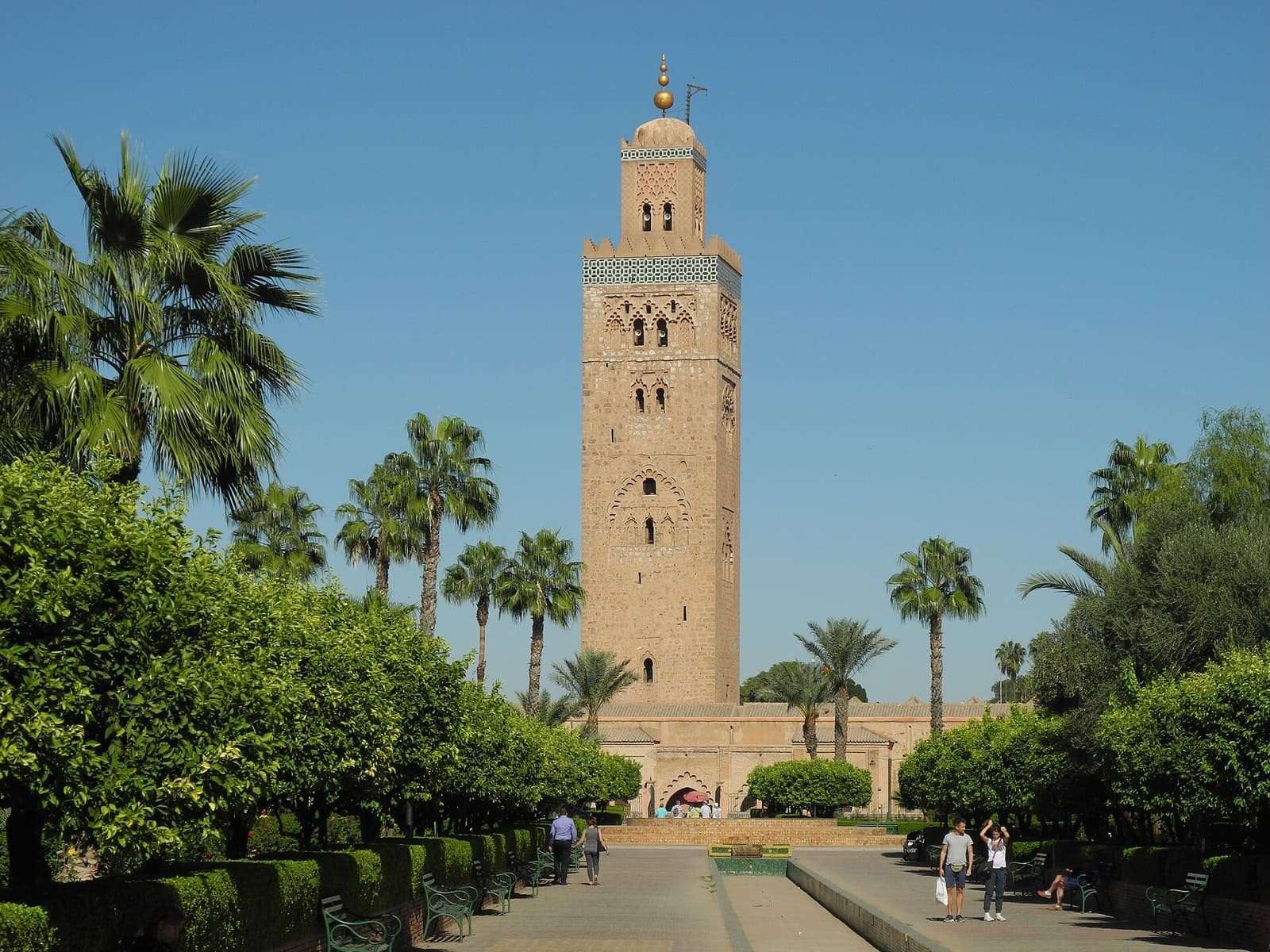
The medina has been a UNESCO World Heritage Site since 1985, but it is no museum: behind the red earth walls, families live, craftsmen work, and there are schools, neighbourhood bakeries and mosques. The minaret of the Koutoubia acts as a lighthouse if you get lost.
Jemaa el-Fna square changes through the day: orange juice and calm in the morning; food stalls, Gnawa musicians and storytellers as evening falls. It is not a stage set for tourists: Marrakchis come with their families to stroll and have dinner.
Gueliz, Hivernage and the new city
Outside the walls, Gueliz is everyday Marrakesh: wide avenues, offices, café terraces and galleries. In its cafés, matches are followed with the same passion as in any bar in Spain. Neighbouring Hivernage is where the big hotels and the nightlife are. Alternate between the two faces: the medina for wandering, the new city for breathing space.
A base for the south
On clear days you can see the High Atlas, and to the west lie Essaouira and the coast. With Supratours buses to Agadir, it is easy to link the two southern host cities: we cover it in Marrakesh and Agadir in a week.
What to see in 1, 2 and 3 days
Day 1 · The medina and Jemaa el-Fna
- Start early by the Koutoubia and its gardens, in the soft light.
- The Saadian Tombs and the ruins of El Badi Palace, in the Kasbah area, before the heat builds.
- Bahia Palace and the Mellah, the former Jewish quarter, with its spice market.
- In the middle of the day, back to the riad: shade, rest and water.
- At sunset, Jemaa el-Fna: dinner at a stall, or watch it light up from a terrace.
Day 2 · Souks, craftsmen and Gueliz
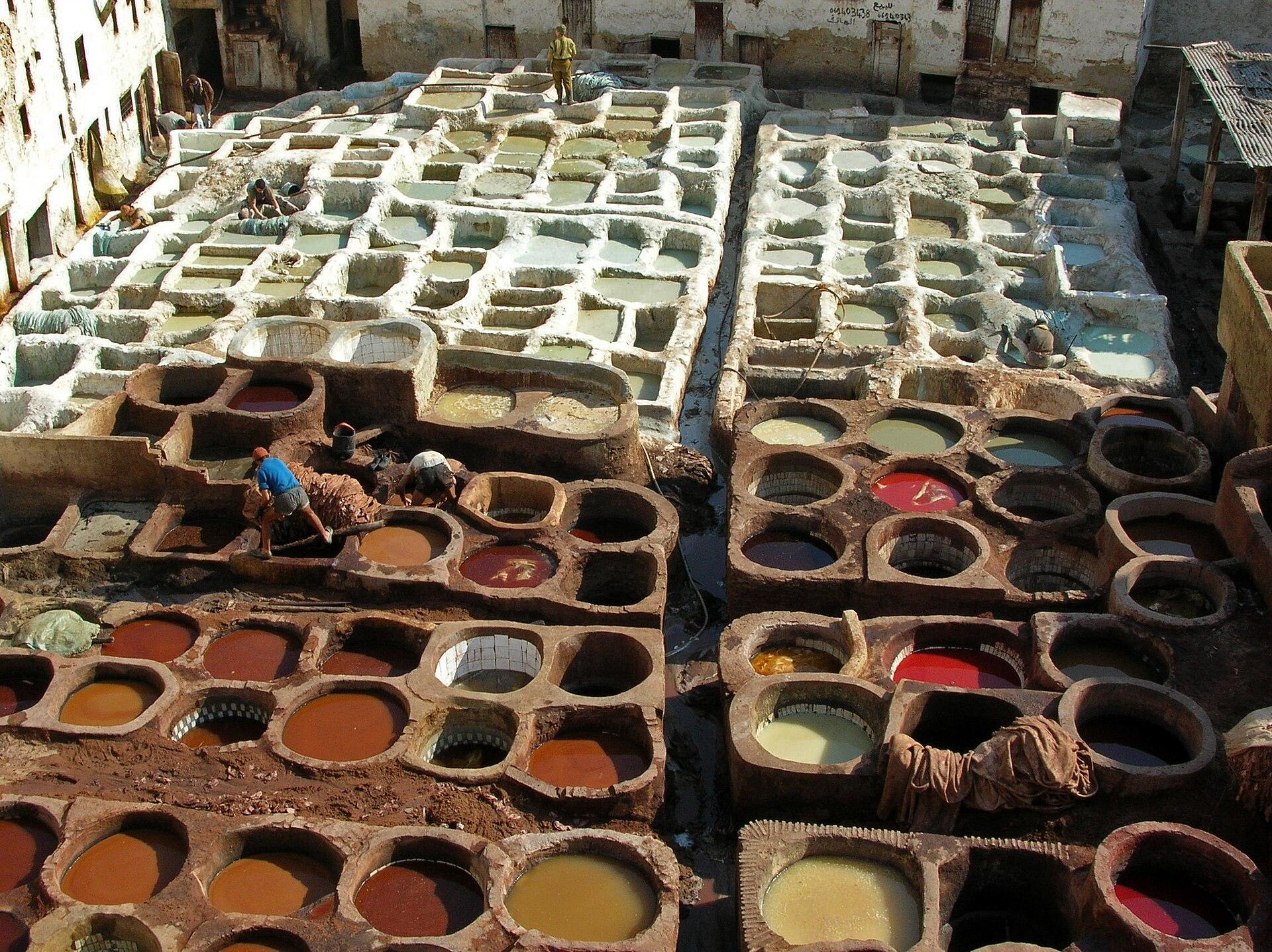
- In the morning, the souks north of the square: each street has its trade, from dyers to leatherworkers.
- The Ben Youssef Madrasa, a former Koranic school of carved stucco and wood.
- To haggle with good humour, a few phrases from Spanish, French and Darija.
- After a rest, the Majorelle Garden in Gueliz, best late in the day as it is one of the busiest sights.
- Coffee, a stroll and dinner in Gueliz.
Day 3 · The Atlas, the gardens or the coast
- Mountain option: the Ourika valley or Imlil, at the foot of Toubkal, with an accredited guide or by grand taxi.
- First, check Spain's Foreign Ministry advice: in November 2026 it advised against travel to Al Haouz province, hit by the earthquake, where these valleys are.
- City option: a hammam in the morning and, in the afternoon, the Menara gardens, with the Atlas behind them if the sky is clear.
- Coastal option: Essaouira, a medina listed as a World Heritage Site since 2001.
- A last evening on a terrace, with the sunset call to prayer.
What to eat in Marrakesh
The city's signature dish is tanjia marrakchia: meat slow-cooked for hours in a clay jar, traditionally in the embers of the furnace that heats the neighbourhood hammam. Beyond tagine and Friday couscous, try lamb mechoui near the square, harira and, for breakfast, msemen and baghrir with honey. And always mint tea.
In the heat, take care with hygiene: Spain's Foreign Ministry recommends bottled water, well-washed fruit and avoiding salads in summer.
Where to stay in Marrakesh
The choice is medina or new city. The medina has the charm of the riads, but many streets are closed to cars; Gueliz and Hivernage are more practical for getting around by taxi, including to the stadium.
Budget
Hostels and simple riads in the medina, near Jemaa el-Fna or the Kasbah. Check there is air conditioning: in July it is not a luxury.
Mid-range
Riads with a courtyard and terrace in neighbourhoods such as Mouassine or Bab Doukkala, or modern hotels in Gueliz.
Splurge
Large hotels with gardens and pools in Hivernage, luxury riads in the medina or resorts in the Palmeraie, on the outskirts.
Affiliate link: if you book through it we earn a commission, at no extra cost to you. How we are funded
Getting around and avoiding scams
Getting around Marrakesh
The medina is explored on foot; for everything else, a petit taxi, the golden-coloured taxis that only operate within the city. The meter is required by law: ask the driver to switch it on or agree the fare before setting off. To leave the city, there are grands taxis.
Uber returned to Marrakesh on 27 November 2025, but the legal framework for the apps is still incomplete and the UK Foreign Office warns that many such cars are unlicensed. For the medina, an offline map helps: see eSIM and internet.
The July heat
Averages are 37.7 °C for the high and 20.6 °C for the low in July (33.6 and 17.9 °C in June), and in the July 2026 heatwave several Moroccan cities went above 40 °C. Do as the Marrakchis do: sightseeing early, shade in the middle of the day and out on the streets from sunset.
- Bottled water always to hand.
- A cap, sun cream and light clothing that covers your shoulders.
- Heatwave alerts on the Directorate of Meteorology's warning map.
- More in weather in June and July.
Safety and well-known scams
According to Spain's Foreign Ministry, Morocco is, in general terms, a safe country for travellers. The usual issues here are minor annoyances. The most common is the fake guide, who tells you the square is closed or there is a festival on and ends up taking you to a shop for a commission; the UK Foreign Office recommends checking their accreditation and the permit from the local authority.
Another well-known practice is henna: someone takes your hand, starts drawing without asking and then demands money. Say no clearly, or agree the price first. Anyone posing with animals expects a tip for the photo. There is a tourist police post on Jemaa el-Fna. More in customs and tipping and money and payments.
The Grand Stade de Marrakech
- Name
- Gran Estadio de Marrakech
- Capacity
- 41,000
- Planned capacity for 2030
- 46,000
- Status
- Being renovated
- Distance from the centre
- 10.2 km16 min by car, without traffic
The Grand Stade de Marrakech opened in 2011 about 10 km north of the centre: 10.2 km and 16 minutes without traffic by our calculation, and about 14 km from the airport. It has 41,000 seats, and the Moroccan government portal plans for 46,000 by 2030.
After a first phase of works for the 2025 Africa Cup of Nations, the second runs until the end of 2028 according to maroc.ma: no athletics track, a full roof and an octagonal layout. We have not been able to confirm its progress in November 2026.
The match schedule and how matches are shared between cities have not been announced. Nor are there any confirmed shuttles: count on a taxi or car and plan your return at night.
The match schedule has not been published yet. When it is announced, we will cover it here without speculation.
Getting there from Spain
By air
Marrakesh-Menara (RAK) has direct flights with Ryanair from Madrid, Alicante, Barcelona, Girona, Gran Canaria, Santander, Seville, Valencia and Zaragoza (and in season Lanzarote, Palma and Tenerife Sur), Iberia from Madrid, Vueling from Barcelona (and in season Bilbao and Santiago), easyJet from Málaga, and Volotea from Bilbao and Binter from Tenerife Norte in season. Royal Air Maroc sells Madrid and Málaga without specifying whether they are direct. Routes change with the season.
The Al Boraq does not reach Marrakesh yet: it links Tangier with Casablanca, from where classic trains continue; the extension to Marrakesh is planned for September 2029 (Al Boraq and ONCF). By car, read driving in Morocco and the road trip from Algeciras.
Frequently asked questions
How do you get to Marrakesh from Spain?
By air, with direct flights from Madrid, Barcelona, Málaga, Seville, Valencia, the Canary Islands and other cities, depending on the season. By car, via Algeciras and Tanger Med and then the motorway in two stages: we explain it in Crossing the Strait.
Does the high-speed train reach Marrakesh?
Not yet. The Al Boraq ends in Casablanca and you continue on a classic train. The extension is planned for September 2029.
Is Marrakesh very hot in July?
Yes: the average high is 37.7 °C and heatwaves can push past 40 °C. Sightsee early, rest at midday and carry water.
How many 2030 World Cup matches will Marrakesh host?
Nobody knows yet. The schedule and how matches are shared between cities have not been announced, and the final list of stadiums was still pending in November 2026.
How do you get to the Grand Stade de Marrakech?
It is about 10 km north of the centre, 16 minutes without traffic. There are no confirmed shuttles: petit taxi, ride-hailing app or your own car.
Sources (8)
Every fact on this page comes from a source consulted on the date shown.
- Hespress · después de 2026, Marruecos toma el relevo (julio de 2026) (press), 2026-11-12
- Royal Air Maroc · vuelos a España, 2026-11-12
- Seat61 · train travel in Morocco (press), 2026-11-12
- OSRM (OpenStreetMap), cálculo del 12-11-2026, 2026-11-12
- Wikipedia · List of World Heritage Sites in Morocco (press), 2026-11-12
- Morocco World News · la LGV Kenitra-Marrakech al 30 % (mayo de 2026) (press), 2026-11-12
- Wikipedia · Marrakesh Menara Airport (press), 2026-11-12
- Visit Morocco · Marrakech, 2026-11-12